- Wildfire smoke
- Trying to get a camping spot (reservations and crowds)
- Changes in the environment surrounding the park
I’m not saying that because of these things I won’t go camping at all. I am saying that it makes camping less pleasant and makes me less likely to go.
Wildfire smoke
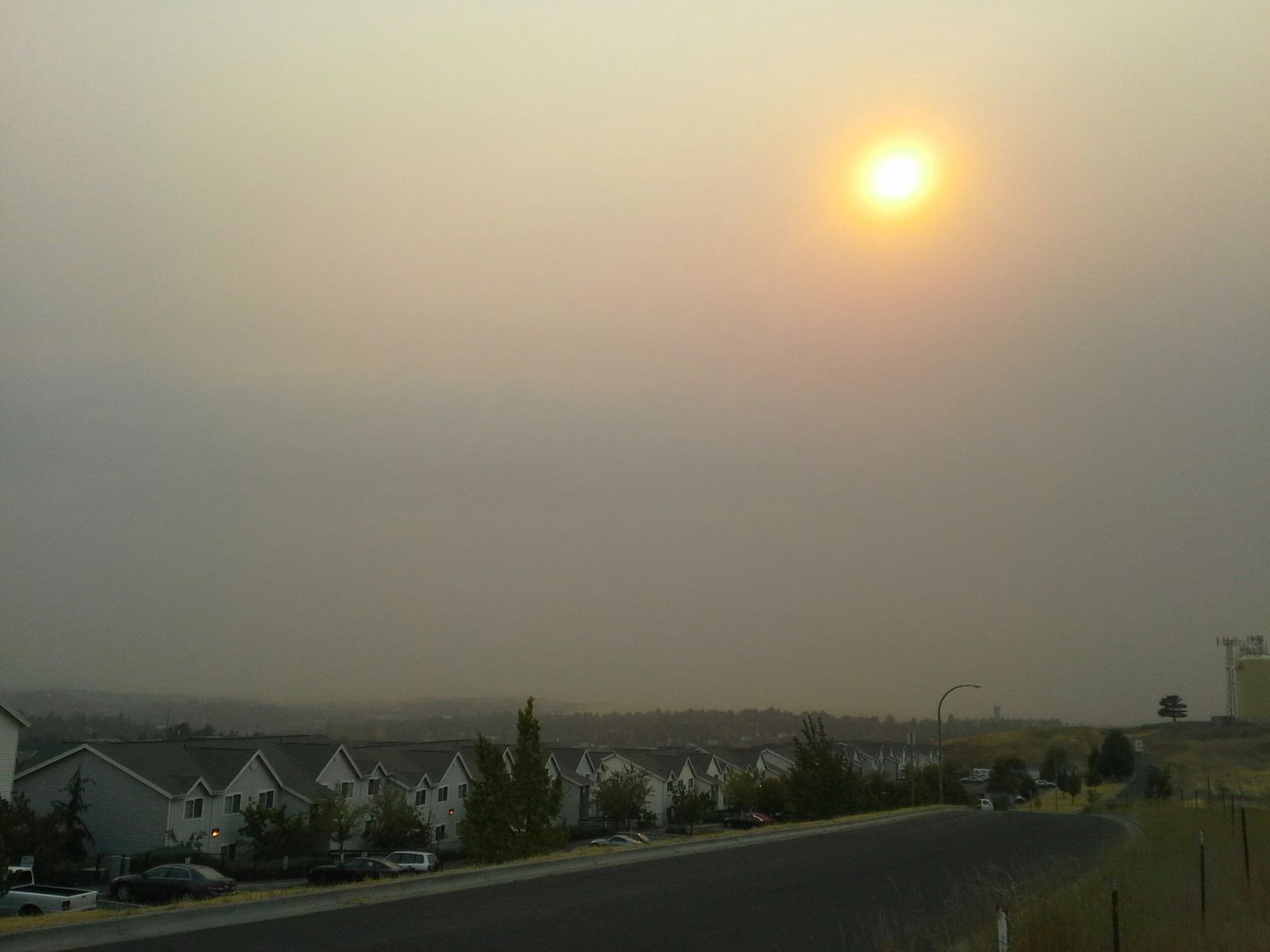 Pullman, WA (September 2017) |
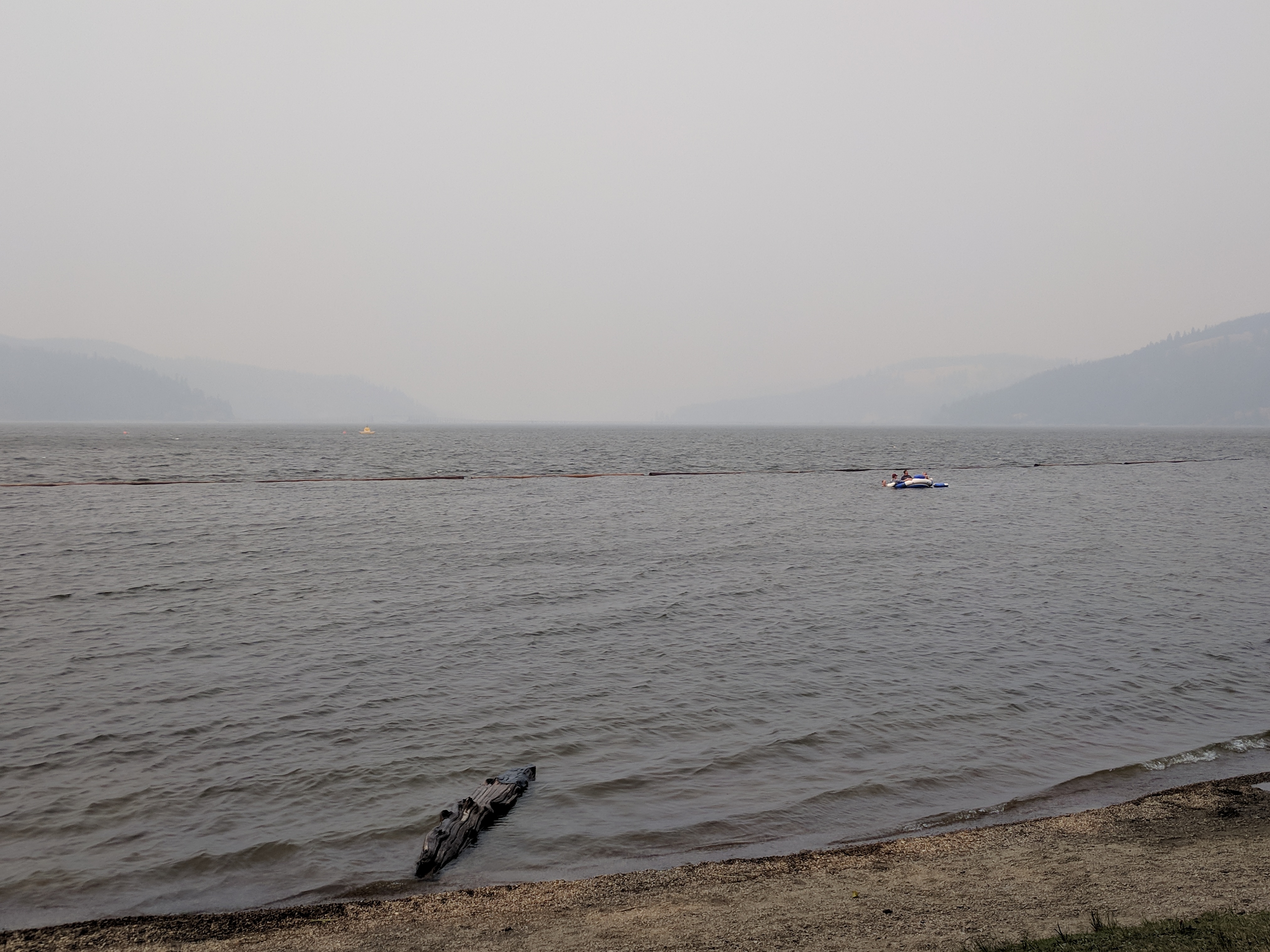 Heyburn State Park, ID (August 2018) |
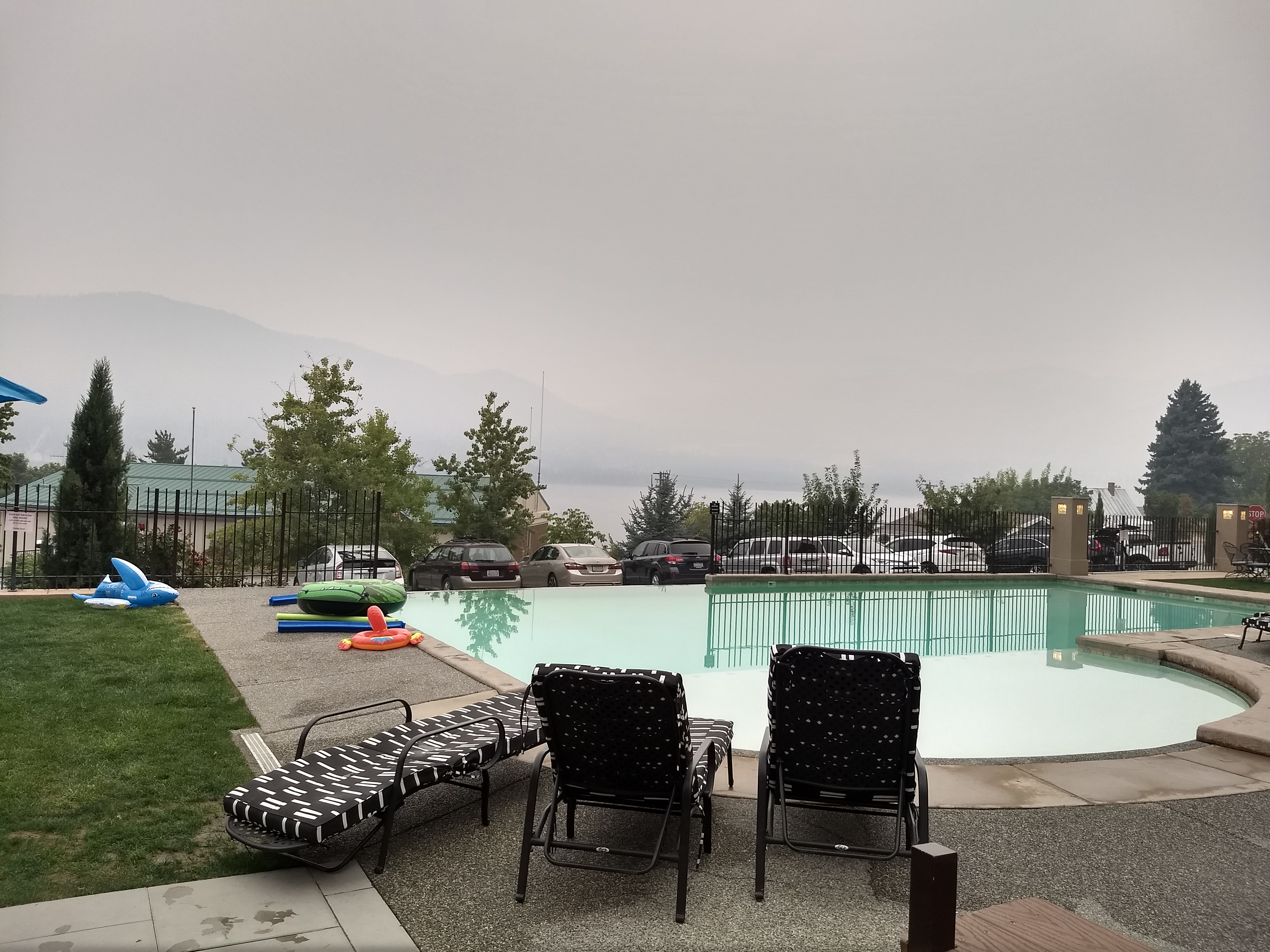 Chelan, WA (September 2020) |
Nothing says quality time with family like air quality that has reached or exceeded the “hazardous” level. These photos match up with the red/purple hotspots in the EPA PM2.5 AQI data (below) from 2017, 2018, and 2020. |
The first problem is smoke. Wildfire smoke, it seems, simply didn’t exist in the Pacific Northwest until about a decade ago. California, yes. Here, no. I’m sure there were wildfires before then (for example, “smokejumping” was invented in the Methow valley), but nobody remembers smoke regularly inundating late summer like it does today. This is true for everyone I’ve talked to in my generation and in my parents’ generation, and on both sides of the Cascade crest. That takes us back to the 1950s in the collective memory of the residents; however, this is not objective evidence. It would be ideal if we could back up this memory with some quantitative data. I don’t have that back to 1950; however, I do have that back to 2002. The EPA PM2.5 AQI data shows that, yes, about 10 years ago, we started regularly having some really bad air quality in late summer. See the figure below. It is true that there are only a few “very unhealthy” or “hazardous” days each year, but I would argue that the enjoyment of the outdoors goes down long before the air quality reaches unhealthy levels. This is especially frustrating since late summer in the Pacific Northwest is the only time that it is reliably warm and dry. And now that time of year also tends to be unpleasantly smoky. This affects more than camping, it affects all outdoor activities. Prevalent wildfire smoke reduces the value proposition of living here vs. somewhere else.
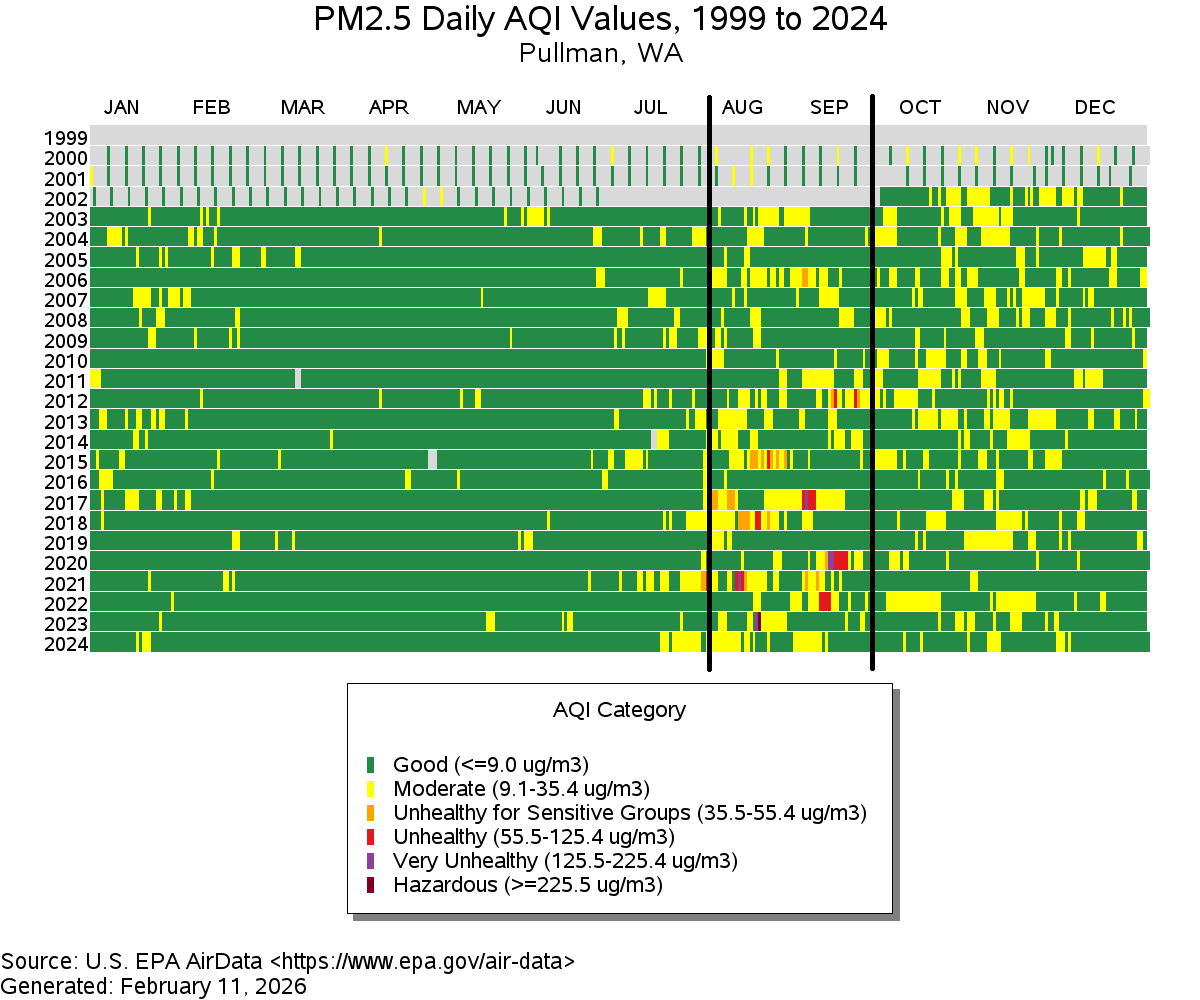
Pullman, WA PM2.5 AQI Data (from EPA AirNow)
Getting a camping spot
The second problem is trying to get a camping spot. It’s just tough. There’s not a lot of supply and there’s a lot of demand. The vast majority of Washington State Parks were built from 1920-1975. That was 50+ years ago. The population of the state, however, has not stopped growing. See figure below.
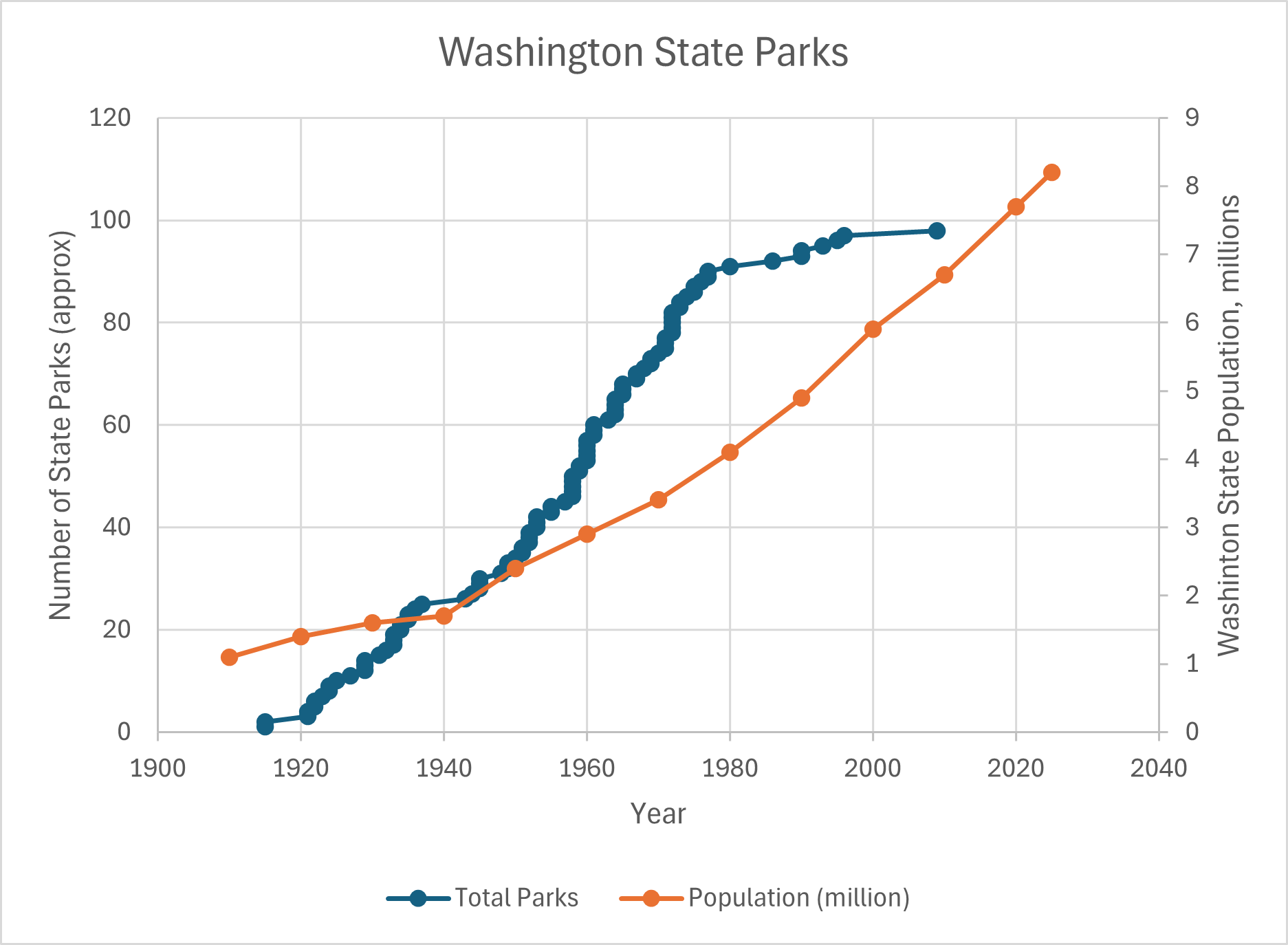
Approximate Number of Washington State Parks vs. Washington State Population.
- List of WA state parks - Wikipedia - List of Washington state parks
- Dates each state park was created - WA State Parks - Park Histories.
- Historical population of WA - Wikipedia - Washington (state) - Demographics. The number of state parks should be considered approximate because I excluded parks I don’t have good data for (some don’t have a history page or don’t list a founded date) and I excluded parks that I feel like are not accessible to the average resident (like the “marine” state parks that you can only get to these by boat), etc.
Which means that the total number of parks per resident peaked near 1980. See figure below.
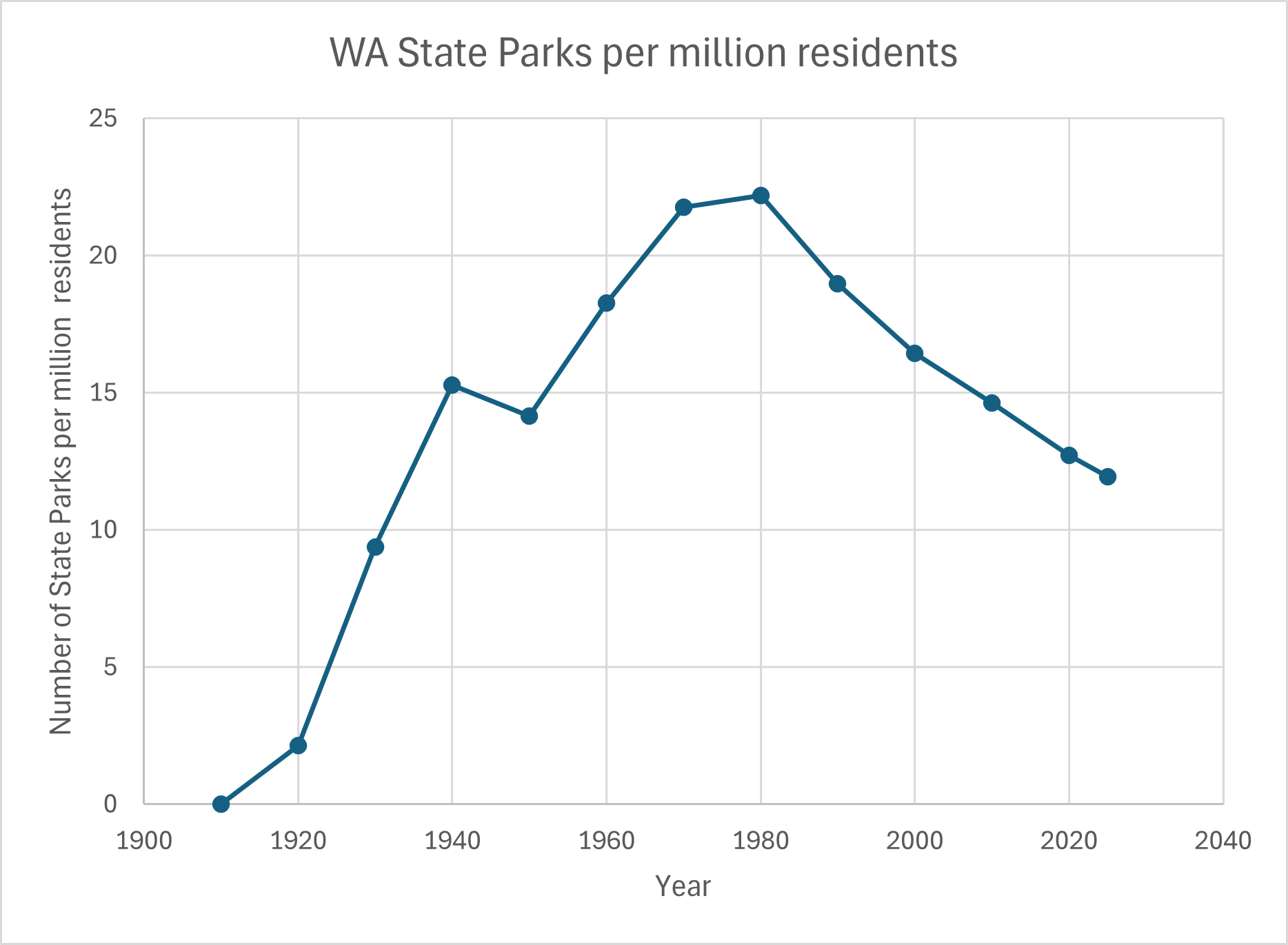
Approximate number of Washington State Parks per million residents
The total number of parks per resident today is similar to what it was in the 1930s but there is also vastly less open/wild/free space today than there was in 1930. The supply/demand imbalance makes the overall situation tough. The state park reservation system makes the situation even more difficult for the typical weekend camper. As far as I can tell, the way the system works is identical in both Washington and Oregon (maybe all states, I’m not sure). The reservation system is biased towards people with longer reservations that can start mid-week. Why? Because the system only allows reservations X months in advance, but only considers the first night of the stay when calculating how far in advance a reservation is. This means that a longer stay can likely beat the system. For example, in Oregon, the reservation system allows reservations 6 months in advance. On February 1, then, the farthest in the future I can book my first night is August 1. But if my total reservation is for 10 nights, I can book August 1-10 on February 1. Whereas if my total reservation is 2 nights (a typical weekend stay), I can’t book August 9-10 until February 9. At that point, it is very likely that there are no spots left since reservations that started mid-week or earlier “beat” the reservation system. At popular state parks, it seems to me like you’re just out of luck.
Changes in the environment
The third problem is changes in the environment surrounding the park. We recently considered a camping trip to Brooks Memorial State Park, which looks beautiful, but it also has:
- US 97 running through the middle of the park.
- High-voltage power lines strung across part of the campground area.
This says to me “unpleasant noise”.
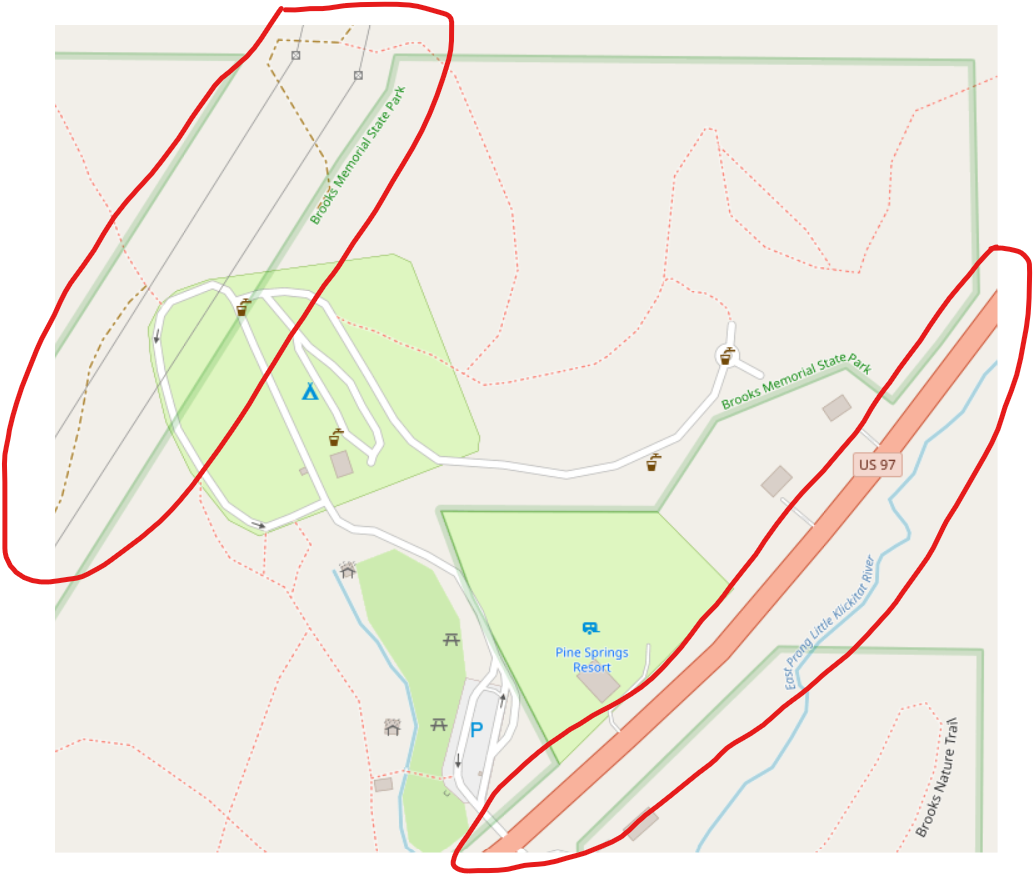
Would you like to camp under the buzzing power lines or next to the major US highway?
It says this to me because of bad experiences at other state parks that are close to major highways or that have major highways running through them (which weirdly seems to be common). Our first experience with this was at Bogachiel State Park. Bogachiel is located right next to highway 101, and not only that, it’s right next to a giant curving hill on highway 101. Now, Bogachiel is on a relatively remote part of 101, but also, 101 is the only road that goes anywhere on the Olympic peninsula. What this means is that you hear traffic all night long and are woken up at regular intervals by semitruck engine braking as large trucks navigate the giant curve in the highway. Very unpleasant.
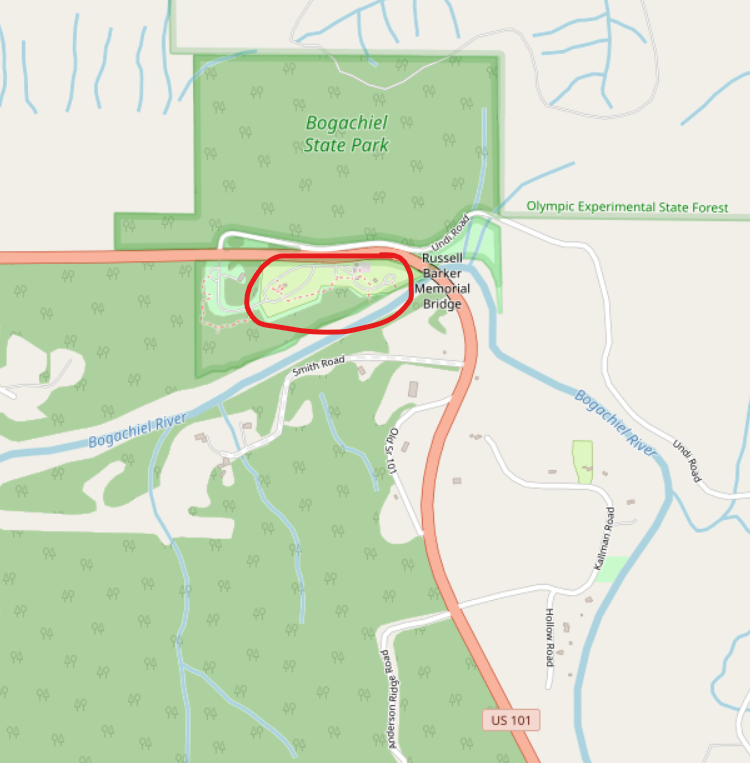
brap brap brap brap brap (at 2 am)
A more recent experience at Sequim Bay State Park was similar. Highway 101 runs through the middle of Sequim Bay State Park, and this part of 101 is actually a busy highway. The campsites at the very edge of the park (away from the highway) are actually alright, but the campsites that are closer to the highway are extremely polluted with road noise. The stream of traffic is so constant that, when we left the park, we needed to turn left onto 101, and we couldn’t. There was simply never a break in the traffic that would allow us to make a left turn onto the highway. Eventually, we gave up and did the turn right, turn left, turn right maneuver to get us going the correct direction. And there’s people in tents 25 feet away trying to sleep. It seems a little nuts to me.
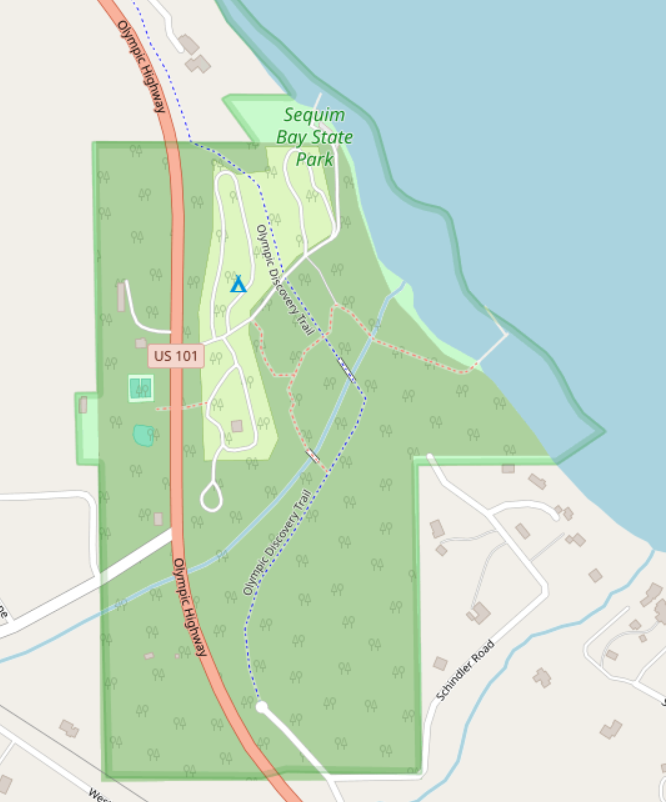
Okay, the map actually says the tents are 100 ft from highway 101, not 25 feet.
My speculation is that these campgrounds were probably quite pleasant when first constructed (Sequim Bay in 1924, Brooks Memorial in 1944, and Bogachiel in 1961). Fast forward 60-100 years, and the traffic volume and speed on these roads has increased dramatically. What was a conveniently-located pleasant park when first established is now simply too close to the noise and unpleasantness of modern civilization (or at least parts of it are).
You might ask, “why did you go camping at Bogachiel”? Why not go somewhere else? Well, we were trying to beat the smoke problem (the first problem I talked about), so we were avoiding dryland campsites in the Inland Northwest. And we were unable to make reservations anywhere else we wanted to go (this is the second problem), but we found space at Bogachiel. Now that we’ve been to Bogachiel, we know why there was space there. It’s not a very pleasant camping location (which is the third problem). I don’t quite know what to do. It seems like we’ll either be:
- Cold / wet (by camping very early or late in the season)
- Smoked out (by camping in the peak dry / warm season)
- Overwhelmed by noise (by camping in parks that aren’t pleasant anymore)
- At home because we couldn’t get a spot at a park we wanted to go to when we wanted to go to it
I’ll work on making my next blog post happier.
]]>